
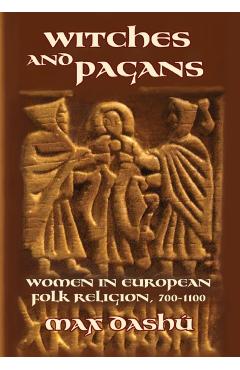
Witches and Pagans: Women in European Folk Religion, 700-1100
Fii primul care dă o notă
Adaugă într-o listă
Despre carte
In this compelling exploration of language, archaeology, and early medieval literature, Max Dashu illuminates hidden cultural heritages. She shows that the old ethnic names for witch signify 'wisewoman, ' 'prophetess, ' 'diviner, ' 'chanter, ' 'herbalist, ' and 'healer.' She fleshes out the oracular ceremonies of the Norse v lur (staff-women), their incantations and sitting-out on the land seeking vision. Archaeological finds of their ritual staffs show that many symbolize the distaff, a spinner's wand that connects with wider European themes of goddesses, fates, witches, and female power. They include Berthe P dauque, also known as the Swan-footed Queen, whose spinning began at the proverbial beginning of time. Veneration of the Fates persisted under many titles, as the Norns, sudice, fatas and f es, Wyrd or the Three Weird Sisters. Witches and Pagans looks at women's sacraments in early medieval Europe, a subject that has been buried deep for centuries. Women set out offering tables for the Three Sisters or the good women, chanted over herbs, and healed children by passing them through 'elf-bores.' Spinning and weaving were ceremonial acts with divinatory or protective power, as bishops' scoldings reveal. Churchmen also railed against the Women Who Go by Night with Diana or Holda or Herodias, in shamanic flight on spirit animals. This was the foundational witch-legend that demonologists seized upon in later centuries. But witch persecution was already underway, as a chapter on the sexual politics of early medieval witch burnings documents. A thousand years ago, an Old English scribe condemned people who bring their offerings to earth-fast stone and also to trees and to wellsprings, swa wiccan taecad--as the witches teach. This indicates that people still regarded witches as spiritual teachers, and that they performed ceremonies of reverence to Earth. Many aspects of ethnic spiritual culture survived the state conversions to Christianity: ancestor veneration, crystal balls, amulets--and witches' wands. Artists depicted Mother Earth giving her breast to serpents, animals, and children. Stories of ancestral women--the Cailleach and the Scandinavian d sir --were handed down over countless generations. Gathering together forgotten strands from heathen European heritages, Witches and Pagans reweaves the ripped webs of women's culture.
Citește-o cu alții
Fă un club în jurul ei: o împărțiți pe etape, vă bifați progresul și discutați fără spoilere.
Pornește un club cu cartea astaUnde o cumperi
Caut-o și la Cărturești
Prețuri verificate azi
Linkuri afiliate: susții comunitatea fără costuri extra.
De la cititori
Niciun cititor nu vinde acum cartea asta.
Ai cartea? Vinde exemplarul tăuRecenzii
Autentifică-te ca să scrii o recenzie →Nicio recenzie încă. A ta poate fi prima! ✍️
Din același raft: Ezoterism & astrologie · Spiritualitate
Tot raftul
Prayers and Protection Magick to Destroy Witchcraft: Banish Curses, Negative Energy & Psychic Attacks; Break Spells, Evil Soul Ties & Covenants; Prote
Glinda Porter
de la 193,93 lei
1 magazin
Astrology. The Library of Esoterica
Andrea Richards
de la 116,64 lei
1 magazin
Magickal Riches: Occult Rituals For Manifesting Money
Damon Brand
de la 105,74 lei
1 magazin
Moon, Sun, and Rising Signs: An Essential Guide to Star Sign Astrology, Personality Types, and Psychic Development
Silvia Hill
de la 195,25 lei
1 magazin
Wicca Book of Herbal Spells: A Beginner's Book of Shadows for Wiccans, Witches, and Other Practitioners of Herbal Magic
Lisa Chamberlain
de la 69,68 lei
1 magazin

Numerology: 5 Books in 1: Discover Who You Are and Decode Your Destiny through Divination, Numerology, Astrology and Tarot to Mast
Michelle Northrup
de la 167,35 lei
1 magazin
Living from the Soul: The 7 Spiritual Principles of Ralph Waldo Emerson
Sam Torode
de la 69,68 lei
1 magazin
Spiritual Cleansing: Soul Cleansing Secrets No One Talks About & How To Cleanse Negative Energy From Your House In 7 Days (Positive Energy
Angela Grace
de la 66,91 lei
1 magazin
Witchcraft: 2 books in 1 -Witchcraft for Beginners and Wicca Starter Kit- Become a modern witch using moon spells, tarots, herbal,
Joy Cunningham
de la 153,10 lei
1 magazin

Near Enemies of the Truth: Avoid the Pitfalls of the Spiritual Life and Become Radically Free
Christopher D. Wallis
de la 145,08 lei
1 magazin