
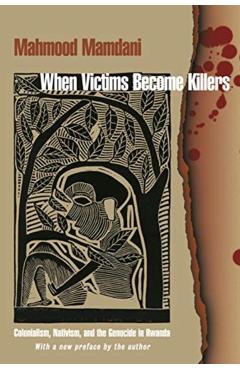
When Victims Become Killers: Colonialism, Nativism, and the Genocide in Rwanda
Fii primul care dă o notă
Adaugă într-o listă
Despre carte
An incisive look at the causes and consequences of the Rwandan genocide When we captured Kigali, we thought we would face criminals in the state; instead, we faced a criminal population. So a political commissar in the Rwanda Patriotic Front reflected after the 1994 massacre of as many as one million Tutsis in Rwanda. Underlying his statement was the realization that, though ordered by a minority of state functionaries, the slaughter was performed by hundreds of thousands of ordinary citizens, including judges, doctors, priests, and friends. Rejecting easy explanations of the Rwandan genocide as a mysterious evil force that was bizarrely unleashed, When Victims Become Killers situates the tragedy in its proper context. Mahmood Mamdani coaxes to the surface the historical, geographical, and political forces that made it possible for so many Hutus to turn so brutally on their neighbors. In so doing, Mamdani usefully broadens understandings of citizenship and political identity in postcolonial Africa and provides a direction for preventing similar future tragedies. An incisive look at the causes and consequences of the Rwandan genocide When we captured Kigali, we thought we would face criminals in the state; instead, we faced a criminal population. So a political commissar in the Rwanda Patriotic Front reflected after the 1994 massacre of as many as one million Tutsis in Rwanda. Underlying his statement was the realization that, though ordered by a minority of state functionaries, the slaughter was performed by hundreds of thousands of ordinary citizens, including judges, doctors, priests, and friends. Rejecting easy explanations of the Rwandan genocide as a mysterious evil force that was bizarrely unleashed, When Victims Become Killers situates the tragedy in its proper context. Mahmood Mamdani coaxes to the surface the historical, geographical, and political forces that made it possible for so many Hutus to turn so brutally on their neighbors. In so doing, Mamdani usefully broadens understandings of citizenship and political identity in postcolonial Africa and provides a direction for preventing similar future tragedies. An incisive look at the causes and consequences of the Rwandan genocide When we captured Kigali, we thought we would face criminals in the state; instead, we faced a criminal population. So a political commissar in the Rwanda Patriotic Front reflected after the 1994 massacre of as many as one million Tutsis in Rwanda.
Citește-o cu alții
Fă un club în jurul ei: o împărțiți pe etape, vă bifați progresul și discutați fără spoilere.
Pornește un club cu cartea astaUnde o cumperi
Caut-o și la Cărturești
Prețuri verificate azi
Linkuri afiliate: susții comunitatea fără costuri extra.
De la cititori
Niciun cititor nu vinde acum cartea asta.
Ai cartea? Vinde exemplarul tăuRecenzii
Autentifică-te ca să scrii o recenzie →Nicio recenzie încă. A ta poate fi prima! ✍️
De Mahmood Mamdani
Toate cărțile autorului
Slow Poison: IDI Amin, Yoweri Museveni, and the Making of the Ugandan State
Mahmood Mamdani
de la 181,35 lei
1 magazin

Citizen and Subject: Contemporary Africa and the Legacy of Late Colonialism
Mahmood Mamdani
de la 260,40 lei
1 magazin

Saviors and Survivors: Darfur, Politics, and the War on Terror
Mahmood Mamdani
de la 119,04 lei
1 magazin

Good Muslim, Bad Muslim: America, the Cold War, and the Roots of Terror
Mahmood Mamdani
de la 117,18 lei
1 magazin
Neither Settler Nor Native: The Making and Unmaking of Permanent Minorities
Mahmood Mamdani
de la 122,65 lei
1 magazin
Din același raft: Istorie
Tot raftulTimelines of World War II
Dk
de la 176 lei
2 magazine

1968: The Year That Rocked the World
Mark Kurlansky
de la 82,94 lei
2 magazine

Selected Works 1990–2025
de la 60 lei
2 magazine

Visions of Medieval Castles
Sabina Madgearu
de la 70,01 lei
2 magazine

A Short Illustrated History of Romanians
Ioan-Aurel Pop
de la 69,90 lei
2 magazine

In the Old Bucharest With Mircea Diaconu
Mircea Diaconu
de la 16,80 lei
2 magazine
The Crusades Through Arab Eyes
Amin Maalouf
de la 111,60 lei
2 magazine

Fire and fury
Michael Wolff
de la 89 lei
2 magazine

Homo Deus: A Brief History of Tomorrow
Yuval Noah Harari
de la 71,41 lei
2 magazine

The Mythology Book
de la 122,71 lei
2 magazine