
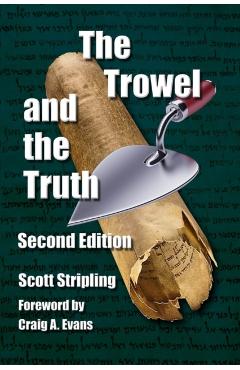
The Trowel and the Truth: A Guide to Field Archaeology in the Holy Land
Fii primul care dă o notă
Adaugă într-o listă
Despre carte
Important and timely, this edition informs readers of many of these recent and important archeological discoveries, discoveries that greatly aid in the interpretation of Scripture. Scott Stripling's The Trowel and the Truth: A Guide to Field Archaeology in the Holy Land gives readers a masterful treatment of the how and why of biblical archaeology. This book is important and timely for at least two reasons. First, archaeological work in the Holy Land continues to make good progress, resulting in exciting discoveries and fresh insights. Dr. Stripling's book informs readers of many of these recent and important discoveries. Secondly, archaeology greatly aids in the interpretation of Scripture. Few students, faculty, and pastors know the land of Israel and its rich treasures from the past as well as they should. Knowledge of the land and its archaeological insights will equip students, teachers, and pastors with important tools for better, sharper, more incisive interpretation of Scripture. Dr. Stripling's book shows how this can be done. The Trowel and the Truth guides readers through every essential aspect of archaeology. This includes geography and chronology, which are vital for understanding the history of Israel, as well as the actual task of archaeological fieldwork and method. Knowing where and when major events took place provides the necessary context and makes it possible to interpret Scripture accurately. In a systematic way, Dr. Stripling's book then works its way through all the major periods in biblical history, from the pre-patriarchal and patriarchal eras to the Roman and Byzantine Ages. Dr. Stripling articulates in the preface his understanding that illumination of the Bible serves as the primary goal of ancient Near Eastern archaeology. He is of course quite correct. This is why the discipline is called biblical archaeology. Some have objected to this language, arguing instead for something more neutral, but no one can deny that the desire to know the Bible better has historically been the driving force behind archaeology in the Near East. Without the correlation between the text of the Bible 10 and the realia of the Near East, there simply would be no discipline called biblical archaeology. Let me say that again: All the theological commitments in the world could never result in a field called biblical archaeology if no correlation between Bible and the remains of human culture could be found.
Citește-o cu alții
Fă un club în jurul ei: o împărțiți pe etape, vă bifați progresul și discutați fără spoilere.
Pornește un club cu cartea astaUnde o cumperi
Caut-o și la Cărturești
Prețuri verificate azi
Linkuri afiliate: susții comunitatea fără costuri extra.
De la cititori
Niciun cititor nu vinde acum cartea asta.
Ai cartea? Vinde exemplarul tăuRecenzii
Autentifică-te ca să scrii o recenzie →Nicio recenzie încă. A ta poate fi prima! ✍️
Din același raft: Spiritualitate
Tot raftul
NLT Student Life Application Study Bible, Filament Enabled (Leatherlike, Rustic Brown, Indexed, Red Letter) -
de la 334,75 lei
1 magazin

NLT Large Print Thinline Center-Column Reference Bible, Filament Enabled (Leatherlike, Pink Gold Floral, Indexed, Red Letter) -
de la 334,75 lei
1 magazin

NLT Large Print Thinline Center-Column Reference Bible, Filament Enabled (Leatherlike, Brown Holy Cross, Indexed, Red Letter) -
de la 334,75 lei
1 magazin
NLT Large Print Thinline Center-Column Reference Bible, Filament Enabled (Leatherlike, Black Holy Windows, Indexed, Red Letter) -
de la 334,75 lei
1 magazin

NLT Every Woman's Bible, Filament Enabled (Leatherlike, Pink Petals, Indexed, Red Letter) -
de la 390,55 lei
1 magazin
NLT Every Woman's Bible, Filament Enabled (Leatherlike, Olive Branch Green, Indexed, Red Letter) -
de la 390,55 lei
1 magazin
Flourish: The NIV Bible for Women, Leathersoft, Brown, Comfort Print
Livingstone Corporation
de la 446,35 lei
1 magazin
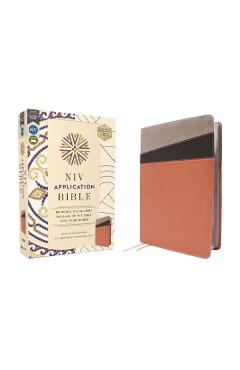
NIV Application Bible, Leathersoft, Coral/Gray, Red Letter, Comfort Print: Bringing the Ancient Message of the Bible Into Your World -
de la 474,25 lei
1 magazin
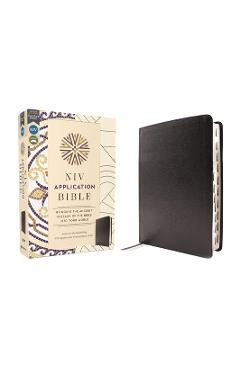
NIV Application Bible, European Bonded Leather, Black, Red Letter, Thumb Indexed, Comfort Print: Bringing the Ancient Message of the Bible Into Your W -
de la 557,95 lei
1 magazin
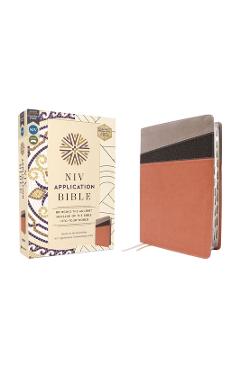
NIV Application Bible, Leathersoft, Coral/Gray, Red Letter, Thumb Indexed, Comfort Print: Bringing the Ancient Message of the Bible Into Your World -
de la 557,95 lei
1 magazin