
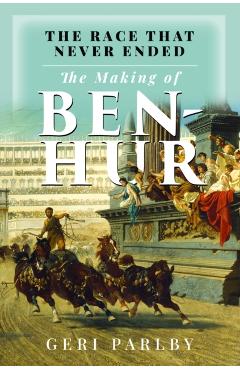
The Race That Never Ended: The Making of Ben Hur
Fii primul care dă o notă
Adaugă într-o listă
Despre carte
Journalist Parlby thoroughly analyzes the versions of the historical fiction Ben-Hur, including an 1880 novel (possibly inspired by Alexander von Wagner's 1873 painting The Chariot Race), plays dating back to 1899, multiple film adaptations (in 1907, 1925, 1959, and 2016), a 2013 TV miniseries, and its use as a promotional tool for consumer goods. Ben-Hur ushered in the reception of other books with biblical settings, reawakened a sense of Christ in everyday life, and underscored themes of family, enslavement, nationhood, and ethnicity, Parlby argues. Lew Wallace (the novel's author) and his family often unsuccessfully sought to control the narrative through copyright, but this epic story of revenge, religion, and redemption was too large to harness. Parlby notes that the influential 1914 Italian epic Cabiria was the first film screened in the White House; that the 1925 rendition of Ben-Hur was the highest-grossing silent film; that the triumph of the 1959 iteration saved MGM from bankruptcy; and that the use of British-voiced actors as tyrants conveyed a subtle anti-imperialist message during the Cold War. VERDICT Parlby covers a lot of territory in this wide-ranging and entertaining history of the biblical epic Ben-Hur in its various incarnations, which still hold strong interest among the public. - Library Journal The Race That Never Ended tells the extraordinary story of Ben-Hur, the epic that has galloped across centuries, cultures, and media. It begins not with Lew Wallace's famous novel, but with a painting: The Chariot Race, an 1870s masterpiece that captured the drama of ancient Rome before Wallace ever set pen to paper. This early vision of spectacle laid the groundwork for the story that would become Ben-Hur: A Tale of the Christ (1880), a book that transformed American literature and imagination. From there, the journey unfolds as Ben-Hur leaps from page to stage, where live horses thundered across theatres, dazzling audiences with a fusion of faith and spectacle. Magic Lantern shows, pantomimes, and courtroom battles over copyright carried the story into the modern age, while the birth of cinema gave it new life--and new struggles. The silent 1925 Ben-Hur became a defining Hollywood achievement, only to be outshone decades later by the 1959 MGM epic that rescued a failing studio and won record-breaking Oscars. Yet the race didn't stop there.
Citește-o cu alții
Fă un club în jurul ei: o împărțiți pe etape, vă bifați progresul și discutați fără spoilere.
Pornește un club cu cartea astaUnde o cumperi
Caut-o și la Cărturești
Prețuri verificate azi
Linkuri afiliate: susții comunitatea fără costuri extra.
De la cititori
Niciun cititor nu vinde acum cartea asta.
Ai cartea? Vinde exemplarul tăuRecenzii
Autentifică-te ca să scrii o recenzie →Nicio recenzie încă. A ta poate fi prima! ✍️