
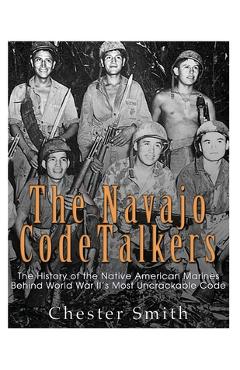
The Navajo Code Talkers: The History of the Native American Marines Behind World War II's Most Uncrackable Code
Fii primul care dă o notă
Adaugă într-o listă
Despre carte
*Includes pictures *Includes footnotes, online resources and a bibliography for further reading *Includes a table of contents One of World War II's most crucial struggles happened in the realm of the unseen, inside the human mind and amid the invisible flow of radio waves. Every war is a battle of wits as intelligence-gathering, tactics, and strategies clash, from the level of individual action up to the grand, overarching schemes of generals and statesmen. Intelligence took on a freshly urgent aspect in World War II, however, as the fate of offensives, armies, and nations came to hang on the struggle to decrypt vital enemy radio traffic and military communications. During the Second World War, cryptography suddenly became a significant factor in warfare because of mid 20th-century advances in communications technology. With radios small and common enough to be fitted into most individual vehicles and readily carried in a man-portable form, information and orders flowed from supreme headquarters to individual squad leaders, tanks, and soldiers at the front and back again. Complex radio networks connected armies to their other elements almost like a nervous system, making unprecedented tactical and strategic coordination between units hundreds of miles apart not only possible but swift and, in some cases, efficient. Decrypting these signals or protecting their contents from enemy spying became one of the touchstones of victory or defeat. Information warfare arrived well ahead of the modern computer and satellite networks. The Allies expended much more effort on decrypting Axis codes than the Axis spent attempting to decipher theirs. Standing on the offensive for much of the war, the Germans felt less need for code-breaking than the Allies. Though they found intelligence useful, it had less value to the Wehrmacht's planners, who needed only moderate detail about enemy movements to plan a successful strategy, while leaving tactics in the highly capable hands of small unit leaders trained to take the initiative and react fluidly to the actual battlefield situation. At a more personal level, the struggle to gain the upper hand in intelligence sometimes resembled the plot of a pulp adventure novel.
Citește-o cu alții
Fă un club în jurul ei: o împărțiți pe etape, vă bifați progresul și discutați fără spoilere.
Pornește un club cu cartea astaUnde o cumperi
Caut-o și la Cărturești
Prețuri verificate azi
Linkuri afiliate: susții comunitatea fără costuri extra.
De la cititori
Niciun cititor nu vinde acum cartea asta.
Ai cartea? Vinde exemplarul tăuRecenzii
Autentifică-te ca să scrii o recenzie →Nicio recenzie încă. A ta poate fi prima! ✍️
Din același raft: Războaiele mondiale · Istorie
Tot raftul
The Lighthouse of Stalingrad: The Hidden Truth at the Heart of the Greatest Battle of World War II
Iain Macgregor
de la 111,60 lei
1 magazin

American Wolf: From Nazi refugee to American spy. A true story
Audrey Birnbaum
de la 226,37 lei
1 magazin
Patriots from the Barrio: The Story of Company E, 141st Infantry: The Only All Mexican American Army Unit in World War II
Dave Gutierrez
de la 133,92 lei
1 magazin

Indestructible: One Man's Rescue Mission That Changed the Course of WWII
John R. Bruning
de la 122,71 lei
1 magazin
The Last Stand of the Tin Can Sailors: The Extraordinary World War II Story of the U.S. Navy's Finest Hour
James D. Hornfischer
de la 167,12 lei
1 magazin

World War Zoos: Humans and Other Animals in the Deadliest Conflict of the Modern Age
John M. Kinder
de la 195,30 lei
1 magazin
Shanghai 1937: Stalingrad on the Yangtze
Peter Harmsen
de la 139,22 lei
1 magazin

World War II at Sea
de la 234,31 lei
1 magazin
The Delaware Bay at War!: The Coastal Defenses of the Delaware Bay during World War Two
Terrance Mcgovern
de la 167,12 lei
1 magazin
Stalingrad
David M Glantz
de la 184,09 lei
1 magazin