
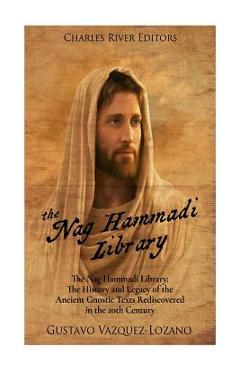
The Nag Hammadi Library: The History and Legacy of the Ancient Gnostic Texts Rediscovered in the 20th Century
Fii primul care dă o notă
Adaugă într-o listă
Despre carte
*Includes excerpts from the texts *Includes online resources and a bibliography for further reading Many people interested in biblical themes know about the Dead Sea Scrolls and their guardians, the mysterious Essenes, the sect of Judaism that hid its priceless library in caves before marching against the Romans in an end-time war, certain that God would intervene at the decisive moment. The ancient texts found in their rock cabinets have produced tons of literature. Fewer people know about an equally fascinating finding in the same region of the planet, made only a few months apart: a collection of hitherto unknown Christian codices, buried in the 4th century AD, and found accidentally by peasants near the city of Nag Hammadi, Upper Egypt. Among the old codices was The Gospel of Thomas, lost for sixteen centuries, and other unfamiliar titles such as The Gospel of Philip and the Acts of Peter and the Twelve Apostles. In this case it was not Essenes who had entrusted them to the protection of the caves and the centuries, but monks who followed a now forgotten variant of Christianity called Gnosticism. The Gnostics were mystics who had no real use or hope for the world. Their writings became forbidden when the Church defined the canon of the books authorized to be read in the congregation. For some reason, instead of burning them, the monks of Nag Hammadi decided to entrust them to posterity, perhaps waiting for better times. The library of Nag Hammadi, Egypt is as significant in the study of early Christianity as the writings of the Essenes to the understanding of Judaism during the time of the Roman occupation. Considering the history of religions, they were composed at the opposite sides of that watershed that was the 1st century CE, which witnessed the birth of Christianity and the destruction of the temple of Jerusalem. The Dead Sea Scrolls belonged to a community that lived before the traumatic destruction of Holy City and its temple at the hands of the Romans.
Citește-o cu alții
Fă un club în jurul ei: o împărțiți pe etape, vă bifați progresul și discutați fără spoilere.
Pornește un club cu cartea astaUnde o cumperi
Caut-o și la Cărturești
Prețuri verificate azi
Linkuri afiliate: susții comunitatea fără costuri extra.
De la cititori
Niciun cititor nu vinde acum cartea asta.
Ai cartea? Vinde exemplarul tăuRecenzii
Autentifică-te ca să scrii o recenzie →Nicio recenzie încă. A ta poate fi prima! ✍️
De Charles River Editors
Toate cărțile autorului
Countess Elizabeth Bathory: The Life and Legacy of History's Most Prolific Female Serial Killer
Charles River Editors
de la 71,42 lei
1 magazin

The Orphan Train Movement: The History of the Program that Relocated Homeless Children Across America
Charles River Editors
de la 71,42 lei
1 magazin

The Navajo Code Talkers: The History of the Native American Marines Behind World War II's Most Uncrackable Code
Charles River Editors
de la 77,71 lei
1 magazin

The Civilian Conservation Corps: The History of the New Deal's Famous Jobs Program during the Great Depression
Charles River Editors
de la 77,71 lei
1 magazin

The Chrysler Building: The History of One of New York City's Most Famous Landmarks
Charles River Editors
de la 56,78 lei
1 magazin

Secretariat: The Life of the Most Famous Triple Crown Winner in American History
Charles River Editors
de la 71,42 lei
1 magazin

Grand Central Station: The History of New York City's Famous Railroad Terminal
Charles River Editors
de la 56,78 lei
1 magazin

The Tuskegee Airmen: The History and Legacy of America's First Black Fighter Pilots in World War II
Charles River Editors
de la 77,71 lei
1 magazin

The Life and Trial of Lizzie Borden: The History of 19th Century America's Most Famous Murder Case
Charles River Editors
de la 50,50 lei
1 magazin

Patrice Lumumba: The Life and Legacy of the Pan-African Politician Who Became Congo's First Prime Minister
Charles River Editors
de la 77,71 lei
1 magazin
Din același raft: Antichitate · Istorie
Tot raftul
Irish Mythology: Enthralling Myths, Folktales, and Legends of Gods, Goddesses, and Mythological Creatures of Ancient Ireland
Billy Wellman
de la 150,61 lei
1 magazin
History of Peru: A Captivating Guide to Peruvian History, Starting from the Chavín Civilization and Other Ancient Andean Civilizations
Captivating History
de la 133,87 lei
1 magazin
Twelve Caesars: Images of Power from the Ancient World to the Modern
Mary Beard
de la 146,88 lei
1 magazin
The Year God Died: Jesus and the Roman Empire in 33 AD
James Lacey
de la 204,12 lei
1 magazin
The New Makers of Modern Strategy: From the Ancient World to the Digital Age
Hal Brands
de la 293,76 lei
1 magazin
The Rise and Fall of Ancient Egypt
Toby Wilkinson
de la 139,50 lei
1 magazin
A History of Ancient Egypt
Marc Van De Mieroop
de la 339,80 lei
1 magazin

Our Ancient Faith: Lincoln, Democracy, and the American Experiment
Allen Guelzo
de la 100,44 lei
1 magazin
The Fall of the Roman Empire: A New History of Rome and the Barbarians
Peter Heather
de la 194,30 lei
1 magazin
The Maya Civilization: An Enthralling Overview of Maya History, Starting from the Olmecs' Domination of Ancient Mexico to the Arrival of Hern
Enthralling History
de la 156,19 lei
1 magazin