
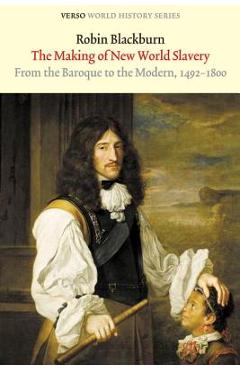
The Making of New World Slavery: From the Baroque to the Modern, 1492-1800
Fii primul care dă o notă
Adaugă într-o listă
Despre carte
The Making of New World Slavery argues that independent commerce, geared to burgeoning consumer markets, was the driving force behind the rise of plantation slavery. The baroque state sought--successfully--to feed upon this commerce and--with markedly less success--to regulate slavery and racial relations. To illustrate this thesis, Blackburn examines the deployment of slaves in the colonial possessions of the Portuguese, the Spanish, the Dutch, the English and the French. Plantation slavery is shown to have emerged from the impulses of civil society, not from the strategies of individual states. Robin Blackburn argues that the organization of slave plantations placed the West on a destructive path to modernity and that greatly preferable alternatives were both proposed and rejected. Finally, he shows that the surge of Atlantic trade, predicated on the murderous toil of the plantations, made a decisive contribution to both the Industrial Revolution and the rise of the West.
Citește-o cu alții
Fă un club în jurul ei: o împărțiți pe etape, vă bifați progresul și discutați fără spoilere.
Pornește un club cu cartea astaUnde o cumperi
Caut-o și la Cărturești
Prețuri verificate azi
Linkuri afiliate: susții comunitatea fără costuri extra.
De la cititori
Niciun cititor nu vinde acum cartea asta.
Ai cartea? Vinde exemplarul tăuRecenzii
Autentifică-te ca să scrii o recenzie →Nicio recenzie încă. A ta poate fi prima! ✍️
Din același raft: Istorie
Tot raftul
A Buddhist Bible
Dwight Goddard
de la 174,30 lei
1 magazin

Anahita: Ancient Persian Goddess and Zoroastrian Yazata
Payam Nabarz
de la 174,30 lei
1 magazin

Kobzar
Taras Shevchenko
de la 178,50 lei
1 magazin

Riflescope Mastery Handbook
Kalel Tavila
de la 224,39 lei
1 magazin

The Transformers: The Movie: Ultimate Visual History
Chris Prince
de la 291,60 lei
1 magazin

Medicine for All People: Science and Ancient Wisdom for Revolutionary Healing
Geeta Maker-clark
de la 129,28 lei
1 magazin

The Revolutionists: The Story of the Extremists Who Hijacked the 1970s
Jason Burke
de la 223,20 lei
1 magazin
Countess Elizabeth Bathory: The Life and Legacy of History's Most Prolific Female Serial Killer
Charles River Editors
de la 71,42 lei
1 magazin

The Emerald Tablets of Thoth the Atlantean
M. Doreal
de la 88,91 lei
1 magazin

Military Strategy for Writers
Stephen Kenneth Stein
de la 111,53 lei
1 magazin