

Adaugă într-o listă
Despre carte
The Idea of History (1946) is a book of philosophy that explores the nature of history and the historian's interpretation of it. Written by English historian, archaeologist, and philosopher R.G. Collingwood, the work encourages students of history to go beyond events into the motivations of the actors themselves. R.G. Collingwood (b. 1889, d. 1943) was the son of an artist/archaeologist father and artist/pianist mother. Showing an aptitude for the classics and history from an early age, he was recognized at school in Classic Moderations (representing fluency in Greek and Latin) as well as ancient history and philosophy. He soon entered academia and spent his entire professional life at Oxford. In fact, he was elected a fellow of Pembroke College, Oxford before he even graduated from University College. Later, he became the Waynflete Professor of Metaphysical Philosophy at the Magdalen College, Oxford. While his teaching work focused on philosophy, he was also a well-known archaeologist, spending his school vacations on dig sites like Hadrian's Wall and writing scholarly articles and books. These works include The Archaeology of Roman Britain (1930) and Roman Britain and the English Settlements, the first volume of the Oxford History of England (1936). Collingwood was considered the leading authority on Roman Britain during his lifetime. Collingwood died in 1943, after several strokes. In the following years, his student T. M. Knox collected a series of lectures by Collingwood, primarily written in 1936, and published them as The Idea of History in 1946. The book is split into five parts, spanning views of history from Herodotus in the Greco-Roman times through the advent and ascendency of Christianity, the Enlightenment, and the 19th Century. Collingwood considered history a science of human affairs mingled with psychology. He argues that to understand the past, the historian must use their historical imagination to recreate the thought process of the actors. By reliving the past in their own mind, the historian can discover the significant patterns and dynamics of previous civilizations. From a focus on humanism in the Greco-Roman era, to a theocentric view in Medieval times, to a reliance on science and a more mature worldview in the Enlightenment and beyond, Collingwood explores how the historians and philosophers in each time viewed history, and how their worldviews influenced their own perceptions of the past.
Citește-o cu alții
Fă un club în jurul ei: o împărțiți pe etape, vă bifați progresul și discutați fără spoilere.
Pornește un club cu cartea astaUnde o cumperi
Caut-o și la Cărturești
Prețuri verificate azi
Linkuri afiliate: susții comunitatea fără costuri extra.
De la cititori
Niciun cititor nu vinde acum cartea asta.
Ai cartea? Vinde exemplarul tăuRecenzii
Autentifică-te ca să scrii o recenzie →Nicio recenzie încă. A ta poate fi prima! ✍️
Din același raft: Istorie
Tot raftul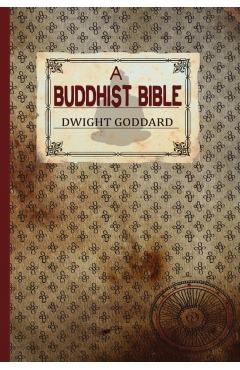
A Buddhist Bible
Dwight Goddard
de la 174,30 lei
1 magazin

Anahita: Ancient Persian Goddess and Zoroastrian Yazata
Payam Nabarz
de la 174,30 lei
1 magazin

Kobzar
Taras Shevchenko
de la 178,50 lei
1 magazin

Riflescope Mastery Handbook
Kalel Tavila
de la 224,39 lei
1 magazin

The Transformers: The Movie: Ultimate Visual History
Chris Prince
de la 291,60 lei
1 magazin

Medicine for All People: Science and Ancient Wisdom for Revolutionary Healing
Geeta Maker-clark
de la 129,28 lei
1 magazin

The Revolutionists: The Story of the Extremists Who Hijacked the 1970s
Jason Burke
de la 223,20 lei
1 magazin

Countess Elizabeth Bathory: The Life and Legacy of History's Most Prolific Female Serial Killer
Charles River Editors
de la 71,42 lei
1 magazin
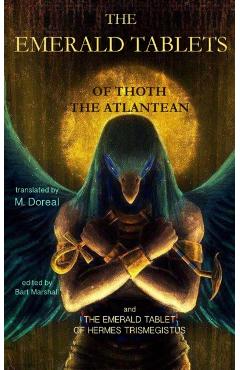
The Emerald Tablets of Thoth the Atlantean
M. Doreal
de la 88,91 lei
1 magazin

Military Strategy for Writers
Stephen Kenneth Stein
de la 111,53 lei
1 magazin