

Spongebob Squarepants and Philosophy: Soaking Up Secrets Under the Sea!
Fii primul care dă o notă
Adaugă într-o listă
Despre carte
SpongeBob SquarePants and Philosophy is designed to introduce fans of SpongeBob SquarePants to some of the great thinkers and questions in philosophy. The essays can be shared by young and old alike, kindling new interest in philosophy and life's big questions. What keeps SpongeBob reeling in major audiences on a daily basis is that underneath the lighthearted and whimsical exterior are the seeds of long-standing and important philosophical discussions about identity and the self, our obligations toward others, benefits and tensions of the individual in community, principles of the marketplace and environmental ethics, and questions of just how exactly Jack Kahuna Laguna can build a fire at the bottom of the ocean. (Okay, so perhaps we don't have an answer for that last one, but maybe if you look into that fire long enough the answer will be revealed.) The book begins with a section exploration of the major characters of the series. To begin, Nicole Pramik uses the philosophies of Aristotle to demonstrate why SpongeBob, more than any other character in the series, is defined by a life of well-being and flourishing. In chapter two, Timothy Dunn provides an assessment of SpongeBob's best friend, Patrick Star, using the writings of J.S. Mill to ask if the life of simple pleasures preferable to the life of the mind, while in chapter three Natasha Liebig uses the German pessimist philosophers to reveal what it means to live the life of Squidward Q. Tentacles. Chapter four uses the competing philosophies of Ayn Rand and Karl Marx to evaluate the actions of SpongeBob's boss, Mr. Eugene Krabs, while in chapter five Denise Du Vernay explains how Sandy Cheeks offers a brand of feminism that breaks down traditional assumptions about masculine and feminine identity and repackages them into constructive and empowering messages for young people. Concluding this section of the book, Nicholas Michaud uses the philosophy of Friedrich Nietzsche to ask us reconsider our belief that SpongeBob and his friends are somehow heroic by giving us insight into the will to power held by the powerful little protozoan, Plankton. Section two of the book is dedicated to exploring the community of Bikini Bottom, starting with Shaun Young's examination of Bikini Bottom as a representation of various theories of the just state.
Citește-o cu alții
Fă un club în jurul ei: o împărțiți pe etape, vă bifați progresul și discutați fără spoilere.
Pornește un club cu cartea astaUnde o cumperi
Caut-o și la Cărturești
Prețuri verificate azi
Linkuri afiliate: susții comunitatea fără costuri extra.
De la cititori
Niciun cititor nu vinde acum cartea asta.
Ai cartea? Vinde exemplarul tăuRecenzii
Autentifică-te ca să scrii o recenzie →Nicio recenzie încă. A ta poate fi prima! ✍️
Din același raft: Filosofie · Spiritualitate
Tot raftul
The Light of the Mind: St. Augustine's Theory of Knowledge
Ronald H. Nash
de la 118,67 lei
1 magazin

Islam and Secularism
Syed Muhammad Naquib Al-attas
de la 148,72 lei
1 magazin
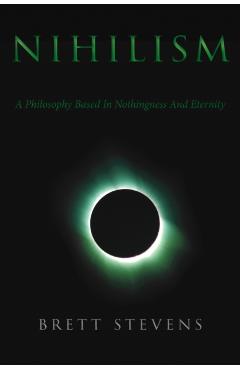
Nihilism: A Philosophy Based In Nothingness And Eternity
Brett Stevens
de la 185,62 lei
1 magazin

A Year of Zen: A 52-Week Guided Journal
Bonnie Myotai Treace
de la 83,65 lei
1 magazin

The Dream of Enlightenment: The Rise of Modern Philosophy
Anthony Gottlieb
de la 148,74 lei
1 magazin

The DAO de Jing: A Qigong Interpretation
Lao Tzu
de la 167,12 lei
1 magazin

Worldmaking After Empire: The Rise and Fall of Self-Determination
Adom Getachew
de la 264,61 lei
1 magazin
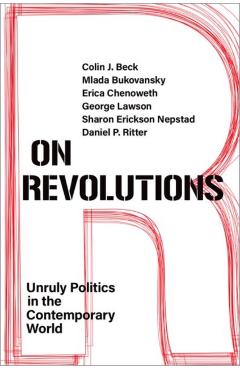
On Revolutions: Unruly Politics in the Contemporary World
Colin J. Beck
de la 309,14 lei
1 magazin

The Analects of Confucius
Confucius
de la 40,81 lei
1 magazin

THE ANALECTS OF CONFUCIUS (annotated)
James Legge
de la 40,81 lei
1 magazin