
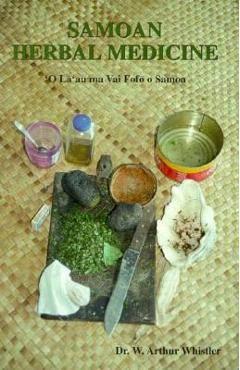
Samoan Herbal Medicine: 'O La'au Ma Vai Fofo O Samoa
Fii primul care dă o notă
Adaugă într-o listă
Despre carte
Two systems of health care exist side by side in Samoa--Samoan medicine and Western medicine. Western medicine is centered in three hospitals--Moto'otua Hospital near Apia, Tuasivi Hospital on Savai'i, and the Lyndon B. Johnson Tropical Medical Center in American Samoa. There are also a series of rural clinics, especially on Savai'i, that are staffed by district nurses. The doctors (foma'i) at the Western Samoan hospitals have either a Diploma of Medicine from the Fiji School of Medicine or an M.D. from New Zealand or elsewhere, and there are usually a few Pālagi (Western) M.D.s and interns from overseas who work along with them. The doctors in American Samoa are M.D.s from the U.S. or elsewhere, and serve on contract for two or more years. In most of the world, Western medicine has demonstrated its superiority over indigenous medical practices, but this is not the case in Samoa, at least not for all ailments. The first line of defense for many Samoans, particularly for infants, is Samoan medicine. This is not due to isolation, because most districts have a clinic, and the majority of the population is less than an hour's bus or car ride from one of the three hospitals noted above. However, a clinic staffed by a nurse is not the same as a hospital staffed by doctors and medical equipment. Savai'i is particularly weak in this area, since the one hospital is now (1994) being rebuilt, and often there are no more than two doctors for the entire island. The two systems are in direct competition, but there is very little conflict or tension. The doctors may think of the fofō--the traditional healers--as witch doctors, and the fofō may confidently believe that the Western doctors just do not have the power to heal Samoan ailments, but there is little friction. Fofō recognize a dichotomy in ailments, with some classified as Samoan illnesses (ma'i Sāmoa) and others as Western illnesses (ma'i Pālagi). They usually treat only the former type, which they consider indigenous; if the fofō determine that the illness of a prospective patient belongs to the latter type, which is considered to be introduced by Westerners, and they do not have a medicine to treat it, the patient will be directed to a hospital or clinic. Likewise, some Western doctors may send patients to fofō if they believe that the ailment is not readily treatable with Western medicines or is psychological and is best treated by traditional Samoan means.
Citește-o cu alții
Fă un club în jurul ei: o împărțiți pe etape, vă bifați progresul și discutați fără spoilere.
Pornește un club cu cartea astaUnde o cumperi
Caut-o și la Cărturești
Prețuri verificate azi
Linkuri afiliate: susții comunitatea fără costuri extra.
De la cititori
Niciun cititor nu vinde acum cartea asta.
Ai cartea? Vinde exemplarul tăuRecenzii
Autentifică-te ca să scrii o recenzie →Nicio recenzie încă. A ta poate fi prima! ✍️
Din același raft: Sănătate & fitness · Sănătate & Lifestyle
Tot raftul
Chart Like A Pro: New Nurses Charting Don't Have To Be Complicated
Merlande Jean
de la 69,40 lei
1 magazin

A Dovetale Press Adaptation of A Christmas Carol by Charles Dickens
Gillian M. Claridge
de la 83,70 lei
1 magazin

The Tropical Houseplant Doctor: An Expert Gardening Guide to Nurse Sick & Dying Plants Back to Vibrant Health
Rhea Spencer
de la 89,23 lei
1 magazin

The Castor Oil Wellness Guide: 100 Recipes and Remedies for Vibrant Living
Bernadette Lance
de la 90,60 lei
1 magazin

Terpenes: The Magic in Cannabis
Beverly A. Potter
de la 94,58 lei
1 magazin

Anti-Inflammatory Diet For Women Over 70: A Comprehensive Guide to Reducing Inflammation, Enhancing Vitality, and Aging with Grace
Olivia Stokes
de la 97,58 lei
1 magazin

Lymphedema and Lipedema Nutrition Guide
de la 100,16 lei
1 magazin

You Will Rock As a Dad!: The Expert Guide to First-Time Pregnancy and Everything New Fathers Need to Know: The Expert Guide to First-Time Pregn
Alex Grace
de la 103,34 lei
1 magazin

Mediterranean Diet for Beginners: The Complete Guide - Healthy and Easy Mediterranean Diet Recipes for Weight Loss - Prevention of Cardiovascular Dise
Tina Cooper
de la 104,55 lei
1 magazin
Budwig Protocol: Cancer is weak, vulnerable and easily curable, this book shows you how!
Lothar Hirneise
de la 108,05 lei
1 magazin