
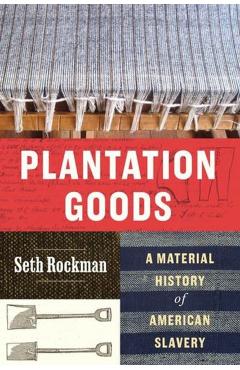
Plantation Goods: A Material History of American Slavery
Fii primul care dă o notă
Adaugă într-o listă
Despre carte
An eye-opening rethinking of nineteenth-century American history that reveals the interdependence of the Northern industrial economy and Southern slave labor. The industrializing North and the agricultural South--that's how we have been taught to think about the United States in the early nineteenth century. But in doing so, we overlook the economic ties that held the nation together before the Civil War. We miss slavery's long reach into small New England communities, just as we fail to see the role of Northern manufacturing in shaping the terrain of human bondage in the South. Using plantation goods--the shirts, hats, hoes, shovels, shoes, axes, and whips made in the North for use in the South--historian Seth Rockman locates the biggest stories in American history in the everyday objects that stitched together the lives and livelihoods of Americans--white and Black, male and female, enslaved and free--across an expanding nation. By following the stories of material objects, such as shoes made by Massachusetts farm women that found their way to the feet of a Mississippi slave, Rockman reveals a national economy organized by slavery--a slavery that outsourced the production of its supplies to the North, and a North that outsourced its slavery to the South. Melding business and labor history through powerful storytelling, Plantation Goods brings northern industrialists, southern slaveholders, enslaved field hands, and paid factory laborers into the same picture. In one part of the country, entrepreneurs envisioned fortunes to be made from planter's hoes and rural women spent their days weaving negro cloth and assembling slave brogans. In another, enslaved people actively consumed textiles and tools imported from the North to contest their bondage. In between, merchants, marketers, storekeepers, and debt collectors laid claim to the profits of a thriving interregional trade. Examining producers and consumers linked in economic and moral relationships across great geographic and political distances, Plantation Goods explores how people in the nineteenth century thought about complicity with slavery while showing how slavery structured life nationwide and established a modern world of entrepreneurship and exploitation. Rockman brings together lines of American history that have for too long been told separately, as slavery and capitalism converge in something as deceptively ordinary as a humble pair of shoes.
Citește-o cu alții
Fă un club în jurul ei: o împărțiți pe etape, vă bifați progresul și discutați fără spoilere.
Pornește un club cu cartea astaUnde o cumperi
Caut-o și la Cărturești
Prețuri verificate azi
Linkuri afiliate: susții comunitatea fără costuri extra.
De la cititori
Niciun cititor nu vinde acum cartea asta.
Ai cartea? Vinde exemplarul tăuRecenzii
Autentifică-te ca să scrii o recenzie →Nicio recenzie încă. A ta poate fi prima! ✍️
Din același raft: Istorie
Tot raftul
The Unvanquished: The Untold Story of Lincoln's Special Forces, the Manhunt for Mosby's Rangers, and the Shadow War That Forged America'
Patrick K. O'donnell
de la 167,40 lei
1 magazin

A Buddhist Bible
Dwight Goddard
de la 174,30 lei
1 magazin

Anahita: Ancient Persian Goddess and Zoroastrian Yazata
Payam Nabarz
de la 174,30 lei
1 magazin

Kobzar
Taras Shevchenko
de la 178,50 lei
1 magazin

Riflescope Mastery Handbook
Kalel Tavila
de la 224,39 lei
1 magazin

The Transformers: The Movie: Ultimate Visual History
Chris Prince
de la 291,60 lei
1 magazin

Medicine for All People: Science and Ancient Wisdom for Revolutionary Healing
Geeta Maker-clark
de la 129,28 lei
1 magazin

The Revolutionists: The Story of the Extremists Who Hijacked the 1970s
Jason Burke
de la 223,20 lei
1 magazin

Countess Elizabeth Bathory: The Life and Legacy of History's Most Prolific Female Serial Killer
Charles River Editors
de la 71,42 lei
1 magazin

The Emerald Tablets of Thoth the Atlantean
M. Doreal
de la 88,91 lei
1 magazin