
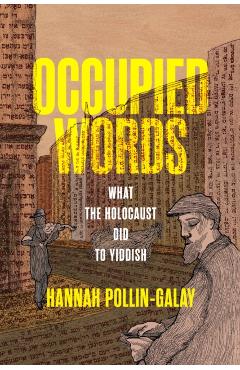
Occupied Words: What the Holocaust Did to Yiddish
Fii primul care dă o notă
Adaugă într-o listă
Despre carte
How Yiddish changed to express and memorialize the trauma of the Holocaust The Holocaust radically altered the way many East European Jews spoke Yiddish. Finding prewar language incapable of describing the imprisonment, death, and dehumanization of the Shoah, prisoners added or reinvented thousands of Yiddish words and phrases to describe their new reality. These crass, witty, and sometimes beautiful Yiddish words - Khurbn Yiddish, or Yiddish of the Holocaust - puzzled and intrigued the East European Jews who were experiencing the metamorphosis of their own tongue in real time. Sensing that Khurbn Yiddish words harbored profound truths about what Jews endured during the Holocaust, some Yiddish speakers threw themselves into compiling dictionaries and glossaries to document and analyze these new words. Others incorporated Khurbn Yiddish into their poetry and prose. In Occupied Words, Hannah Pollin-Galay explores Khurbn Yiddish as a form of Holocaust memory and as a testament to the sensation of speech under genocidal conditions. Occupied Words investigates Khurbn Yiddish through the lenses of cultural history, philology, and literary interpretation. Analyzing fragments of language consciousness left behind from the camps and ghettos alongside the postwar journeys of three intellectuals--Nachman Blumental, Israel Kaplan and Elye Spivak--Pollin-Galay seeks to understand why people chose Yiddish lexicography as a means of witnessing the Holocaust. She then turns to the Khurbn Yiddish words themselves, focusing on terms related to theft, the German-Yiddish encounter and the erotic female body. Here, the author unearths new perspectives on how Jews experienced daily life under Nazi occupation, while raising questions about language and victimhood. Lastly, the book explores how writers turned ghetto and camp slang into art--highlighting the poetry and fiction of K. Tzetnik (Yehiel Di-Nur) and Chava Rosenfarb. Ultimately, Occupied Words speaks to broader debates about cultural genocide, asking how we might rethink the concept of genocide through the framework of language.
Citește-o cu alții
Fă un club în jurul ei: o împărțiți pe etape, vă bifați progresul și discutați fără spoilere.
Pornește un club cu cartea astaUnde o cumperi
Caut-o și la Cărturești
Prețuri verificate azi
Linkuri afiliate: susții comunitatea fără costuri extra.
De la cititori
Niciun cititor nu vinde acum cartea asta.
Ai cartea? Vinde exemplarul tăuRecenzii
Autentifică-te ca să scrii o recenzie →Nicio recenzie încă. A ta poate fi prima! ✍️
Din același raft: Științe sociale · Știință & Tehnologie
Tot raftul
Between Critical Thinking and Literary Critical Thinking
Dragos Avadanei
de la 26,99 lei
3 magazine
Forensic Science: A Very Short Introduction
Jim Fraser
de la 50,57 lei
2 magazine
A Room of One's Own
Virginia Woolf
de la 55 lei
2 magazine
The New Huey P. Newton Reader
Huey P. Newton
de la 111,32 lei
2 magazine
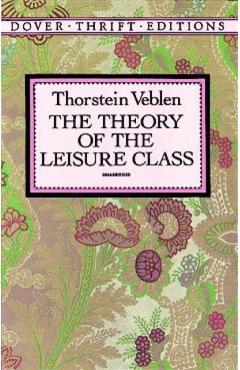
Theory of the Leisure Class
Thorstein Veblen
de la 44,64 lei
2 magazine
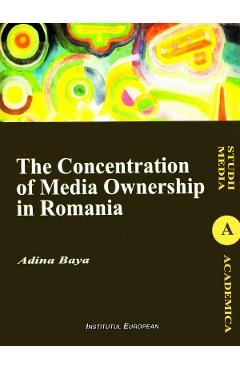
The Concentration of Media Ownership in Romania
Adina Baya
de la 18,33 lei
2 magazine
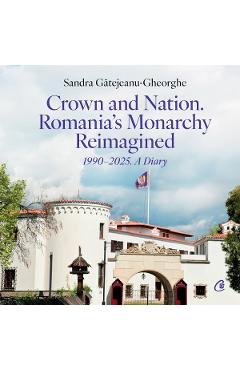
Crown and Nation. Romania's Monarchy Reimagined 1990-2025. A Diary
Sandra Gatejeanu-Gheorghe
de la 75 lei
2 magazine
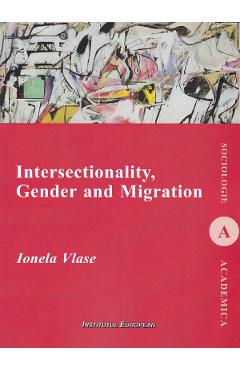
Intersectionality, Gender and Migration
Ionela Vlase
de la 14,80 lei
2 magazine
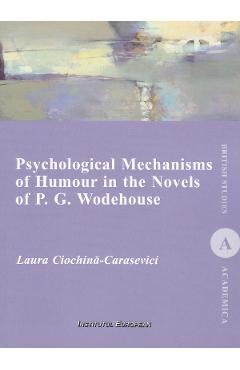
Psychological Mechanisms of Humour in the Novels of P.G. Wodehouse
Laura Ciochina-Carasevici
de la 29,61 lei
2 magazine
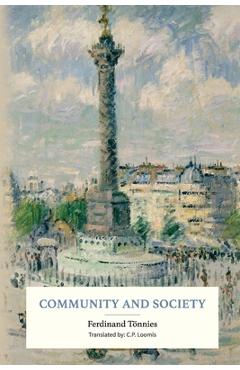
Community and Society
Ferdinand Tönnies
de la 88,67 lei
1 magazin