
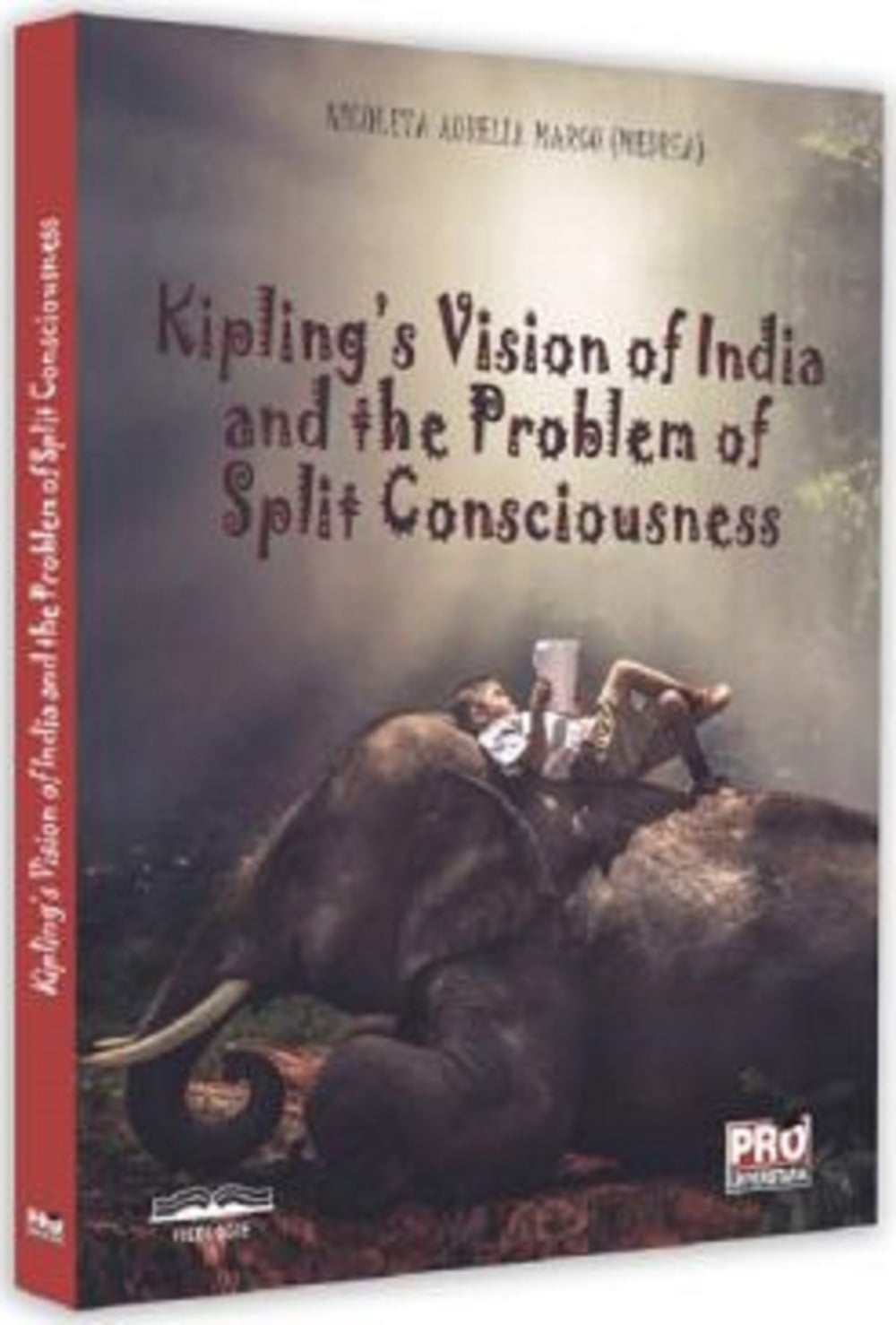
Kipling's Vision of India and the Problem of Split Consciousness
Nicoleta Aurelia Marcu (Medrea
Fii primul care dă o notă
Adaugă într-o listă
Despre carte
"When it comes to the first Nobel prize winner in English literature, everyone remembers The Jungle Books and Mowgli, but few see the multiple and complex meanings of the two concepts combined in the title, the book and the jungle, civilization and savagery, the civilizer and the civilized, the Self and the Other, We and They, the English and the Indians; we can therefore have the impression that this is the point from where Nicoleta Marcu (Medrea) started her bold exploration of topics and issues that postcolonial literature has been relentlessly addressing for some time. We are therefore dealing with imperialism and post-imperialism, both in history and culture and in Rudyard Kipling's work and private life.A poly-vocal author - as Kipling is presented in the last chapter of this book - the creator, trapped in his own indecisions, is continually unveiling himself in writings that take the form of selfdiscovery journeys, which reveal a self - once again - divided between the bazaar boy and the sahib. To conclude, according to the main idea of the book, a re-examination of the relationship between the writer and the imperial project is required, Kipling being often, somewhat simplistically, identified with this project. The Empire, therefore, writes back once more."
Citește-o cu alții
Fă un club în jurul ei: o împărțiți pe etape, vă bifați progresul și discutați fără spoilere.
Pornește un club cu cartea astaUnde o cumperi
Caut-o și la Libris
Prețuri verificate azi
Linkuri afiliate — susții comunitatea fără costuri extra.
De la cititori
Niciun cititor nu vinde acum cartea asta.
Ai cartea? Vinde exemplarul tăuRecenzii
Autentifică-te ca să scrii o recenzie →Nicio recenzie încă. A ta poate fi prima! ✍️
Din același raft: Carte străină
Tot raftul
Jujutsu Kaisen Vol. 1
Gege Akutami
de la 49,99 lei
4 magazine

The Confession of an atheist priest
Ion Aion
de la 34,36 lei
4 magazine

Spy x Family Vol. 1
Tatsuya Endo
de la 39,99 lei
4 magazine

Jujutsu Kaisen Vol. 3
Gege Akutami
de la 49,99 lei
4 magazine

Wuthering Heights
Emily Bronte
de la 12,53 lei
4 magazine
Fake Skating
Lynn Painter
de la 60,10 lei
3 magazine
The Batman Who Laughs
Scott Snyder
de la 89,90 lei
3 magazine

Sundials from Cluj County, Romania
Dan-George Uza
de la 30,12 lei
3 magazine
What I learned from Graham Greene
Andrei Gorzo
de la 44,50 lei
3 magazine

The Essential Tales of H.P. Lovecraft
H.P. Lovecraft
de la 78,17 lei
3 magazine