
Despre carte
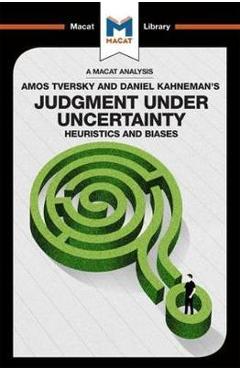
Amos Tversky and Daniel Kahneman's 1974 paper `Judgement Under Uncertainty: Heuristics and Biases' is a landmark in the history of psychology. Though a mere seven pages long, it has helped reshape the study of human rationality, and had a particular impact on economics - where Tversky and Kahneman's work helped shape the entirely new sub discipline of `behavioral economics.' The paper investigates human decision-making, specifically what human brains tend to do when we are forced to deal with uncertainty or complexity. Based on experiments carried out with volunteers, Tversky and Kahneman discovered that humans make predictable errors of judgement when forced to deal with ambiguous evidence or make challenging decisions. These errors stem from `heuristics' and `biases' - mental shortcuts and assumptions that allow us to make swift, automatic decisions, often usefully and correctly, but occasionally to our detriment. The paper's huge influence is due in no small part to its masterful use of high-level interpretative and analytical skills - expressed in Tversky and Kahneman's concise and clear definitions of the basic heuristics and biases they discovered. Still providing the foundations of new work in the field 40 years later, the two psychologists' definitions are a model of how good interpretation underpins incisive critical thinking.
Citește-o cu alții
Fă un club în jurul ei: o împărțiți pe etape, vă bifați progresul și discutați fără spoilere.
Pornește un club cu cartea astaUnde o cumperi
Caut-o și la Cărturești
Prețuri verificate azi
Linkuri afiliate — susții comunitatea fără costuri extra.
Recenzii
Autentifică-te ca să scrii o recenzie →Nicio recenzie încă. A ta poate fi prima! ✍️