
Despre carte
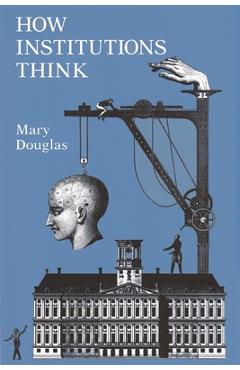
Do institutions think? If so, how do they do it? Do they have minds of their own? If so, what thoughts occupy these suprapersonal minds? Mary Douglas delves into these questions as she lays the groundwork for a theory of institutions. Usually the human reasoning process is explained with a focus on the individual mind; her focus is on culture. Using the works of Emile Durkheim and Ludwik Fleck as a foundation, How Institutions Think intends to clarify the extent to which thinking itself is dependent upon institutions. Different kinds of institutions allow individuals to think different kinds of thoughts and to respond to different emotions. It is just as difficult to explain how individuals come to share the categories of their thought as to explain how they ever manage to sink their private interests for a common good. Douglas forewarns us that institutions do not think independently, nor do they have purposes, nor can they build themselves. As we construct our institutions, we are squeezing each other's ideas into a common shape in order to prove their legitimacy by sheer numbers. She admonishes us not to take comfort in the thought that primitives may think through institutions, but moderns decide on important issues individually. Our legitimated institutions make major decisions, and these decisions always involve ethical principles.
Citește-o cu alții
Fă un club în jurul ei: o împărțiți pe etape, vă bifați progresul și discutați fără spoilere.
Pornește un club cu cartea astaUnde o cumperi
Caut-o și la Cărturești
Prețuri verificate ieri
Linkuri afiliate — susții comunitatea fără costuri extra.
Recenzii
Autentifică-te ca să scrii o recenzie →Nicio recenzie încă. A ta poate fi prima! ✍️