
Despre carte
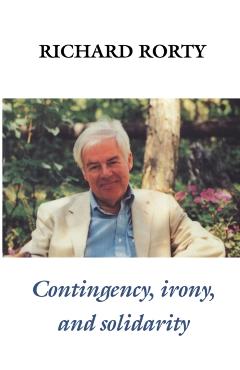
In this book, major American philosopher Richard Rorty argues that thinkers such as Nietzsche, Freud, and Wittgenstein have enabled societies to see themselves as historical contingencies, rather than as expressions of underlying, ahistorical human nature, or as realizations of suprahistorical goals. This ironic perspective on the human condition is valuable but it cannot advance Liberalism's social and political goals. In fact, Rorty believes that it is literature and not philosophy that can do this, by promoting a genuine sense of human solidarity. Specifically, it is novelists such as Orwell and Nabokov who succeed in awakening us to the cruelty of particular social practices and individual attitudes. Thus, a truly liberal culture would fuse the private, individual freedom of the ironic, philosophical perspective with the public project of human solidarity as it is engendered through the insights and sensibilities of great writers. Rorty uses a wide range of references--from philosophy to social theory to literary criticism--to elucidate his beliefs.
Citește-o cu alții
Fă un club în jurul ei: o împărțiți pe etape, vă bifați progresul și discutați fără spoilere.
Pornește un club cu cartea astaUnde o cumperi
Caut-o și la Cărturești
Prețuri verificate ieri
Linkuri afiliate — susții comunitatea fără costuri extra.
Recenzii
Autentifică-te ca să scrii o recenzie →Nicio recenzie încă. A ta poate fi prima! ✍️