
Adaugă într-o listă
Despre carte
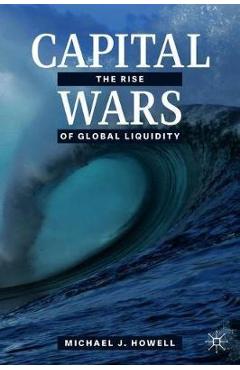
Economic cycles are driven by financial flows, namely quantities of savings and credits, and not by high street inflation or interest rates. Their sweeping destructive powers are expressed through Global Liquidity, a $130 trillion pool of footloose cash. Global Liquidity describes the gross flows of credit and international capital feeding through the world's banking systems and wholesale money markets. The huge jump in the volume of international financial markets since the mid-1980s has been boosted by deregulation, innovation and easy money, with financial globalisation now surpassing the peaks of integration reached before the First World War. Global Liquidity drives these markets: it is often determinant, frequently disruptive and always fast-moving. Barely one fifth of Wall Street's huge gains over recent decades have come from earnings: rising liquidity and investors' appetite for riskier financial assets have propelled stock prices higher. Similar experiences are shared worldwide and even in emerging markets, such as India, flat earnings have not deterred waves of foreign money and domestic mutual funds from driving-up stock prices. Now with central banks actively pursuing quantitative easing policies, industrial corporations flush with cash and rising wealth levels among emerging market investors, the liquidity theory of investment has never been more important.International spill-overs of these rapacious cross-border flows sets off capital wars and exposes the unattractive face of liquidity called 'risk.' As the world grows bigger, it becomes ever more volatile. From the early 1960s onwards, the world economy and its financial markets have suffered from three broad types of shocks - labour costs, oil and commodities, and global liquidity. Financial markets spin on fragile axes and the absence of liquidity often provides a warning of upcoming troubles. Global Liquidity is a much-discussed, but narrowly-researched and vaguely-defined topic. This book deeply explores the subject by clearly defining and measuring liquidity worldwide and by showing its importance for investors. The roles of central banks, shadow banking, the rise of Repo and growth of wholesale money are discussed. Additionally, covering the latest developments in China's increasingly dominant financial economy, this book will appeal to practitioners, policy-makers, economists and academics, as well as those with a general interest in how financial markets work.
Citește-o cu alții
Fă un club în jurul ei: o împărțiți pe etape, vă bifați progresul și discutați fără spoilere.
Pornește un club cu cartea astaUnde o cumperi
Caut-o și la Cărturești
Prețuri verificate azi
Linkuri afiliate: susții comunitatea fără costuri extra.
De la cititori
Niciun cititor nu vinde acum cartea asta.
Ai cartea? Vinde exemplarul tăuRecenzii
Autentifică-te ca să scrii o recenzie →Nicio recenzie încă. A ta poate fi prima! ✍️
Din același raft: Business & Bani
Tot raftul
Purple Cow
Seth Godin
de la 71,22 lei
2 magazine

Corporation That Changed the World
Nick Robins
de la 128,06 lei
2 magazine

Poke the Box
Seth Godin
de la 71,22 lei
2 magazine

A Business Proposal, Vol. 2
Narak
de la 84,75 lei
2 magazine

Investing For Dummies, UK Edition
Tony Levene
de la 128,06 lei
2 magazine

The Toyota Way, Second Edition: 14 Management Principles from the World's Greatest Manufacturer
de la 164,90 lei
2 magazine

The Mitigation Handbook: Essential Technical and Administrative Information for the New Restoration Business Owner to Get Started Right and Prosper Lo
Robert F. Jordan
de la 557,63 lei
1 magazin

Critical Success Factors In Organization And Management
Constantin Mihaescu
de la 40,74 lei
1 magazin

From Contempt to Curiosity: Creating the Conditions for Groups to Collaborate Using Clean Language and Systemic Modelling
Caitlin Walker
de la 184,17 lei
1 magazin
Monetary Policy
Lucian Croitoru
de la 20,37 lei
1 magazin