
Despre carte
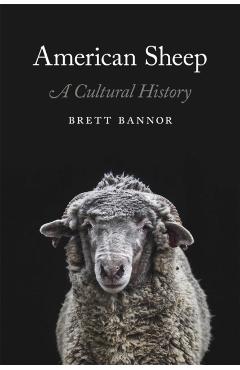
Why did Thomas Jefferson write that he would be happy if all dogs went extinct? What economic opportunity did attorney John Lord Hayes envision for the newly emancipated during Reconstruction? What American workers were mocked by Theodore Roosevelt as morose, melancholy men? What problems with revenue collection did Congressman James Beauchamp Clark mention when proposing an income tax? Why did Harley O. Gable of Armour & Company recommend that his meat-packing business manufacture violin strings? Why was Senator Lyndon Johnson angry at the Army and Navy Munitions Board at the start of the Korean War? The answers to all these questions involve sheep. From the colonial era through the mid-twentieth century, America's flocks played a key role in the nation's development. Furthermore, much consternation centered around the sheep the United States lacked, so that dependency on foreign wool--a headache in times of peace--became a full-blown crisis in wartime. But more than just providers of wool, sheep were valued for their meat, for their byproducts after slaughter, and even for their efficiency at lawn maintenance. Here is the story of the complex and fascinating relationship between Americans and their sheep. Brett Bannor explains how sheep cultivation has significantly impacted the broader growth and development of the United States. The history of America's sheep encompasses topics that touch on many cornerstones of the American experience, such as enslavement, warfare, western expansion, industrialization, taxation, feminism, conservation, and labor relations, among others. Why did Thomas Jefferson write that he would be happy if all dogs went extinct? What economic opportunity did attorney John Lord Hayes envision for the newly emancipated during Reconstruction? What American workers were mocked by Theodore Roosevelt as morose, melancholy men? What problems with revenue collection did Congressman James Beauchamp Clark mention when proposing an income tax? Why did Harley O. Gable of Armour & Company recommend that his meat-packing business manufacture violin strings? Why was Senator Lyndon Johnson angry at the Army and Navy Munitions Board at the start of the Korean War? The answers to all these questions involve sheep. From the colonial era through the mid-twentieth century, America's flocks played a key role in the nation's development. Furthermore, much consternation centered around the sheep the United States lacked, so that dependency on forei
Citește-o cu alții
Fă un club în jurul ei: o împărțiți pe etape, vă bifați progresul și discutați fără spoilere.
Pornește un club cu cartea astaUnde o cumperi
Caut-o și la Cărturești
Prețuri verificate ieri
Linkuri afiliate — susții comunitatea fără costuri extra.
Recenzii
Autentifică-te ca să scrii o recenzie →Nicio recenzie încă. A ta poate fi prima! ✍️